
Preparing a gas BBQ for spring involves a five-step maintenance process: checking gas connections for leaks, inspecting burner ports for obstructions, removing winter grease build-up, caring for cooking surfaces according to the manufacturer’s instructions, and checking burner performance before cooking. These steps help maintain your BBQ and support safer operation throughout the entertaining season.
Home Fires was named Australia and New Zealand’s Most Outstanding Weber Store 2025. In this guide, we explain how to prepare your gas BBQ for spring, from checking gas connections to cleaning cooking components and caring for suitable cast-iron hotplates.
This article is the Home Fires guide to how to season a BBQ plate and other essential aspects of gas grill maintenance. Explore our gas BBQs Sydney options for premium alfresco cooking, including our Weber Spirit gas BBQ range.
Gas BBQ Sydney Spring Maintenance: The 5-Step Revival Plan
Caring for your gas BBQ in Sydney is easier with a five-step revival plan. Whether you have a freestanding or built-in BBQ in Sydney, follow these five steps to prepare your appliance for the warmer months:
- Step 1 involves conducting soapy water leak checks on gas regulators, hoses and cylinder connections.
- Step 2 focuses on inspecting burner ports to remove debris and insect blockages.
- Step 3 requires stripping residual grease traps to eliminate flare-up hazards.
- Step 4 covers the correct care of your cooking surface, including seasoning bare cast iron where required by the manufacturer.
- Step 5 validates burner flame stability and heat distribution prior to cooking.
Step 1: Conducting Gas Hose and Connection Safety Inspections
While a BBQ may seem like a relaxing, enjoyable and low-risk activity, safety preparation is still crucially important. Fire and Rescue NSW recorded more than 930 residential fires and 400 kitchen or cooking-area fires during spring, emphasising the need for thorough pre-season appliance checks.
Ensuring the safety of your BBQ starts with checking BBQ hoses, connections and gas leaks safely. Inspect hoses before use and replace any cracked, perished or brittle hose with a compatible replacement in accordance with the appliance instructions.
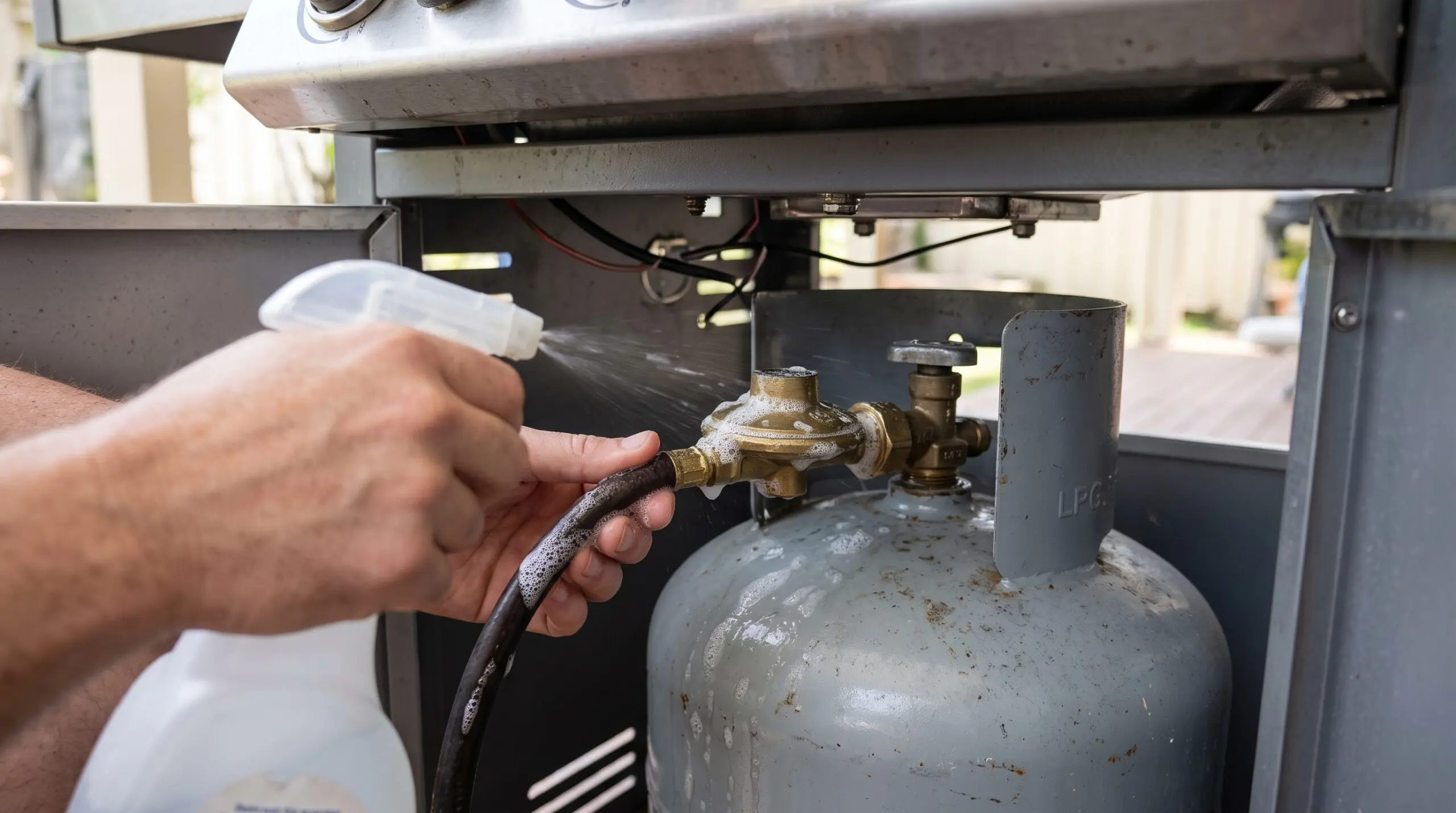
The most effective way to do this is to perform the soapy water test. Mix water and liquid dish soap in a spray bottle or bowl.
Apply the soapy solution to the relevant gas connections and watch for bubbles that may indicate a leak. Never use a naked flame to test for leaks. If you detect bubbles, smell gas or suspect a leak, turn off the gas supply if it is safe to do so and follow the manufacturer’s safety instructions. Do not light the BBQ until the problem has been resolved.
Step 2: Burner Port Maintenance and Insect Clearance
Spiders, insects and other debris can obstruct burner tubes and venturi openings, interfering with normal gas flow and combustion. Inspect these areas as part of routine gas grill maintenance, following the appliance manufacturer’s instructions.
To inspect burner venturi tubes for blockages, turn off the gas supply, let the grill or appliance cool down completely and follow the manufacturer’s instructions to access the burner assembly. Use a cleaning tool recommended by the manufacturer to remove obstructions from burner ports without damaging the openings.
Check the burner flames against the pattern described in your appliance manual. If the flames are persistently yellow, uneven or unusually weak, switch off the BBQ and arrange a professional inspection if the cause is not clear.
Step 3: Stripping Winter Grease Accumulation and Cookbox Residue
Fat and grease accumulate inside cookboxes and become a major flare-up hazard when preheating on high. It’s important to be vigilant about build-up, especially in winter when the cold weather makes grease thicker and stickier. Here is a cleaning workflow to follow for cookboxes, flame tamers and grease management trays:
Prep and “dry scrape”
Clean from the top down to avoid dragging debris over areas you have cleaned already. Disconnect the gas tank or ensure the grill is completely powered down. Remove the cooking grates and heat deflectors and put them aside. Plastic scrapers preserve cookbox coatings while removing hardened debris to dispose of it in removable drip pans.
Soften and strip the cookbox residue
Turn off the BBQ and allow it to cool before cleaning. Remove loose grease and carbonised residue with a suitable scraper, following the manufacturer’s instructions for the cookbox and its protective coating. Clean removable grease trays with warm soapy water and a suitable non-abrasive cleaning tool, following the manufacturer’s instructions for the tray material and finish. Use a non-scratch scouring pad to loosen the paste and wipe the slurry with paper towels.
Clean burners and internal components
For cooking grates that need a deeper clean, follow the manufacturer’s care instructions. Where suitable, soak them in warm soapy water and use a non-abrasive brush or pad. Clean heat deflectors and other internal components according to the specific appliance instructions.
Avoid spraying liquid or pushing wet grease directly onto the gas burner ports. Clean burner ports only with a tool and method approved by the manufacturer, taking care not to force debris into the openings.
Step 4: How to Season a BBQ Plate: Step-by-Step Cast-Iron Care
If your BBQ has a bare cast-iron hotplate that requires seasoning, follow the manufacturer’s instructions before first use and as needed to maintain the surface. Porcelain-enamelled cooking surfaces generally do not require traditional seasoning.
Hotplate seasoning relies on a process called oil polymerisation, which involves unsaturated fats cross-linking under heat to form a seasoned layer that helps protect bare cast iron and improve food release.
Here’s a step-by-step guide to how to season a bare cast-iron BBQ plate:
- Clean the plate
With warm water and a small amount of dishwashing liquid, clean your hotplate with a soft brush (no steel wool).
- Rinse and dry
Rinse your BBQ plate with clean water and dry it thoroughly with paper towels or a clean cloth.
- Apply oil
For a bare cast-iron hotplate that requires seasoning, apply a thin, even layer of an oil approved by the manufacturer to the clean, completely dry surface using a lint-free cloth.
- Heat and wipe off
Heat the plate according to the manufacturer’s seasoning instructions, then allow it to cool as directed. Repeat only if the instructions recommend additional coats.
For a seasoned bare cast-iron hotplate, remove food residue after cooking and apply a light coating of suitable oil if recommended by the manufacturer. Follow the appliance instructions for preheating and preparing the surface before cooking again.

Step 5: Verifying Operational Temperatures and Food Safety Standards
Whether you’re cooking just for yourself or for others, verifying operational temperatures and upholding food safety standards ensures that all your food is cooked safely. Bacteria that cause food poisoning can multiply rapidly in the food danger zone between 5°C and 60°C.
Use a clean food thermometer and follow the appropriate safe internal temperature for the food being cooked. FSANZ recommends at least 75°C in the centre for poultry, minced or rolled meats, and liver and other offal. Digital probe thermometers provide accurate core readings without relying on visual guesswork. To gain an accurate reading, you need to measure the thickest part of the food (the thermal core) and ensure the probe doesn’t touch gristle, fat or bone.
Clean the thermometer probe between checks to help prevent cross-contamination. Use a probe thermometer to check the internal temperature of food rather than relying on the lid thermometer, which measures the cooking environment rather than the centre of the food.
Deciding Between Servicing, Repairing, or Upgrading Your Gas BBQ
Deciding between servicing, repairing or upgrading your gas BBQ depends on the age of the grill, the issues you’re experiencing and the cost of repairs vs. a new unit. But when you need to know what to look for, there are some common signs that can indicate whether you need a new grill, a repair job or a gas BBQ service in Sydney.
Signs Your Gas BBQ Requires Professional Servicing
- Strong or unusual gas smells (e.g. a “rotten egg” stench)
- A flame with an orange, yellow or “lazy” appearance rather than a crisp blue flame
- Rusted burner ports
- Sticking gas valves
- Ignition that clicks slowly and fails to spark, or struggles to stay lit
- Visible wear and tear or corrosion
These symptoms can indicate that your gas BBQ needs further inspection, cleaning, maintenance or component replacement. If you suspect a gas leak or a combustion problem, stop using the appliance and follow the manufacturer’s safety instructions.
Upgrading to a Built-in Outdoor Kitchen Unit
Some problems can’t be fixed by servicing or repairs alone. Severe structural rust affecting the cookbox or chassis may make replacement more practical than further repairs. Assess the condition of the appliance and the cost of repair before deciding whether to replace it with a freestanding BBQ or explore your built-in outdoor kitchen setup options for a built-in BBQ Sydney upgrade.
Preparing Your Backyard for the Ultimate Sydney Entertaining Season
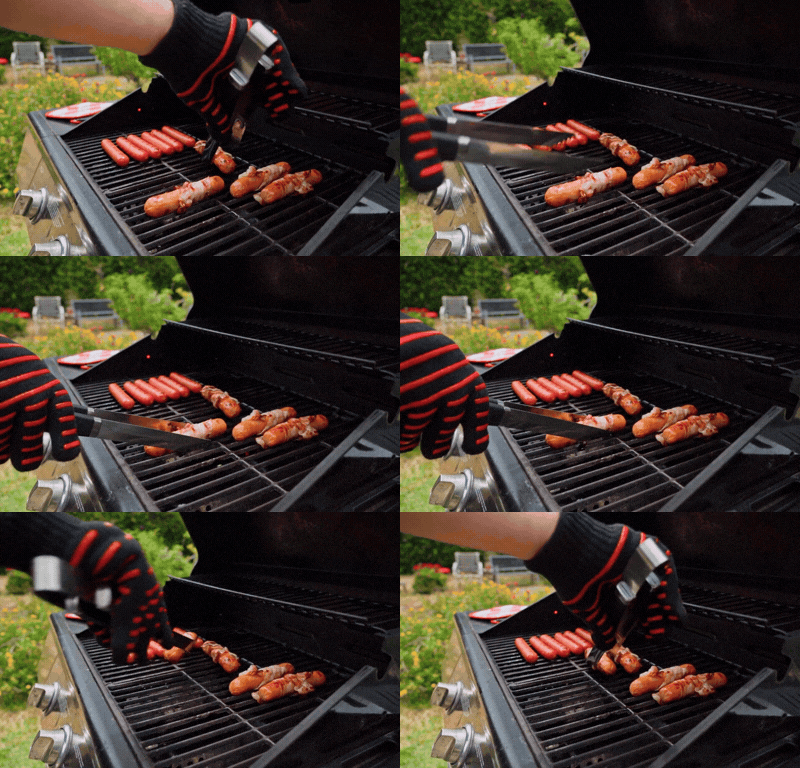
Home Fires has supported Sydney households with BBQs and fireplaces since 1982. Get your BBQ ready for the warmer months with essential BBQ accessories and maintenance supplies, replacement parts and advice on choosing your next appliance.
Visit our Minto or Casula showroom to explore our Weber gas BBQ range and accessories, or contact the Minto and Casula team to discuss maintenance requirements, replacement parts and available servicing options.
Frequently Asked Questions (FAQ)
How often should I season my gas BBQ plate?
Seasoning frequency depends on the cooking surface and the manufacturer’s instructions. If your BBQ has a bare cast-iron hotplate that requires seasoning, maintain it as directed and apply a light coat of suitable oil when recommended. Porcelain-enamelled surfaces generally do not require traditional seasoning.
How do I test for a gas leak on my BBQ hose?
Check your BBQ’s manual and Fire and Rescue NSW guidance before testing for leaks. Apply soapy water to the relevant connections and watch for bubbles, which may indicate escaping gas. Never use a naked flame. If you detect a leak, shut off the cylinder if it is safe to do so, and do not light the BBQ until the problem has been resolved.
What oil is best for seasoning a cast-iron BBQ plate?
For a bare cast-iron hotplate that requires seasoning, use an oil recommended by the manufacturer and apply a thin, even layer to the clean, dry surface. Canola, rice bran or grapeseed oil may be suitable, depending on the appliance instructions. Porcelain-enamelled cooking surfaces generally do not require traditional seasoning.
Why is my gas BBQ flame yellow instead of blue?
A persistently yellow, uneven or unusually weak flame can indicate a burner obstruction or another combustion problem. Turn off the BBQ and allow it to cool before checking for visible obstructions using the manufacturer’s approved method. If the problem persists, arrange a professional inspection rather than attempting repairs to the gas system.
Can I leave my gas BBQ outside during Sydney winters?
Many gas BBQs can be stored outdoors if the manufacturer’s instructions permit it and the appliance is protected from the weather. Before covering the BBQ, clean the cookbox and grease tray, allow the appliance to cool and follow the manufacturer’s storage instructions. Position and cover the BBQ as directed, keeping it away from standing water and combustible materials.